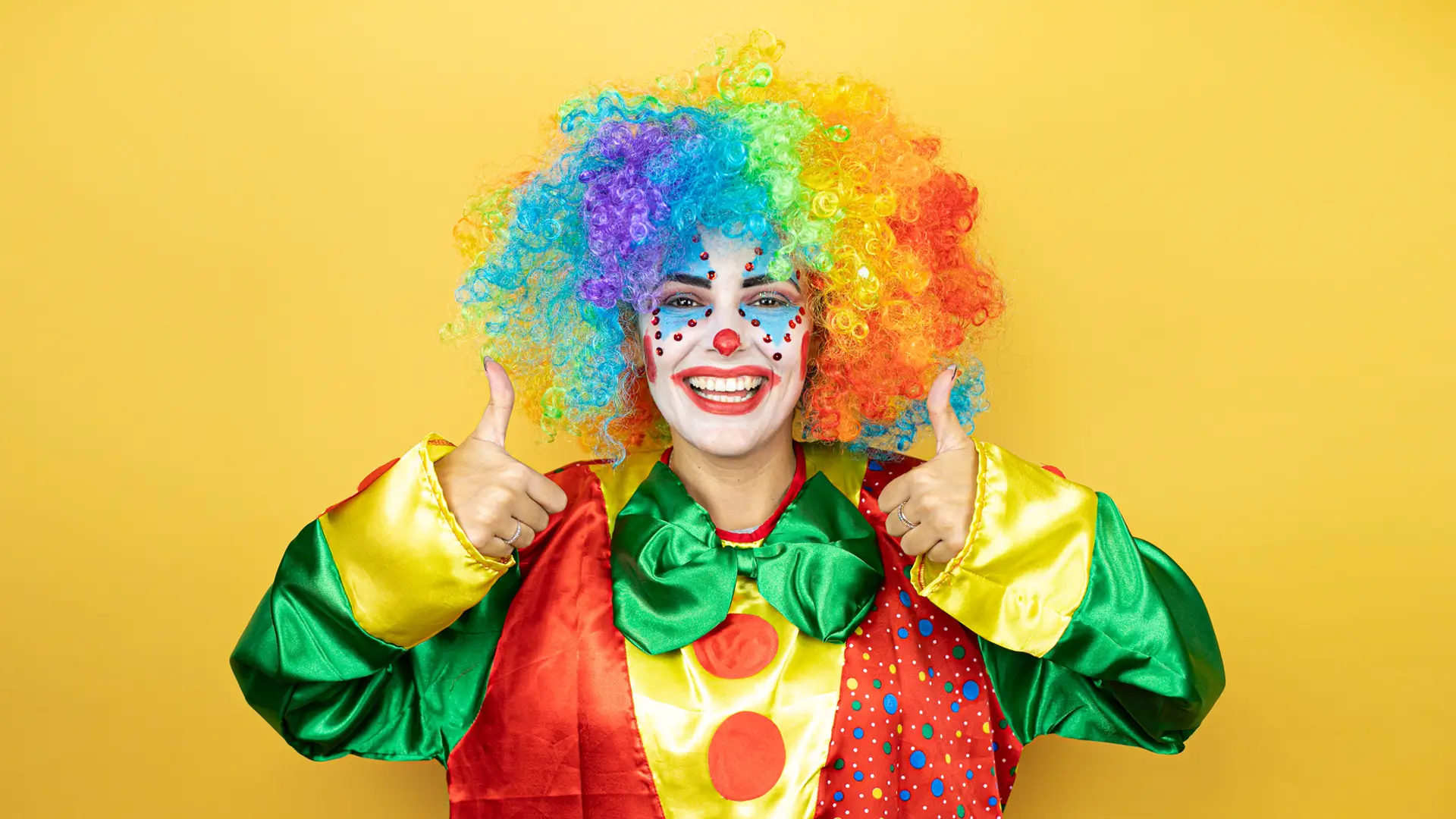
The other morning, I listened to an essay for The Paris Review called Two Strip Clubs, Paris and New Hampshire. It’s a very funny examination of the differences between American and European ideals. My favourite example of which is when the American author reveals to a table of expats that her French husband is in fact a clown. She says it with pride, musing that ‘here, clowns are cool.’ The shocked response eventually comes from one of the American men: “I’m afraid of clowns.”
In a 2023 study conducted by the University of South Wales, it was found that in a sample size of 987 adults, across 64 different countries, 53.5% of participants were afraid of clowns. This was far more than other studies had estimated, which put the percentage in single digits. This seemed to demonstrate that nowadays, it’s actually more ‘normal’ to be afraid of clowns than to not be. Sorry, France.
Somewhere down the line, our childhood entertainers became the thing of nightmares. It happens. Preferences change. The public is wishy-washy and what’s right today can very quickly become wrong tomorrow. So, as a marketer, how do you preserve a distinct, robust identity today while also ensuring enough malleability to survive the changing preferences of tomorrow?
Well, here are some examples of brands that managed just that:
Birkenstock
Karl Birkenstock released his orthopaedic sandal back in 1963. Initially marketed as a ‘health sandal’, encouraging better posture and overall foot health, it was flat, wide and unrefined. Utilitarian. Even ugly. Recent trends, however, have made comfort and wellness king. Nothing represents status better than looking after yourself, and Birkenstock has capitalised on this opportunity brilliantly. Embracing its new identity as a fashion item while crediting it to its unaffected design principles.
Twinings
Twinings, the English tea brand, has been around since 1706, and it has retained a royal warrant since 1837, supplying every monarch since Queen Victoria. Arguably more impressive (at least to us as marketers) is the fact that it has also maintained the world’s oldest continuously used logo – dating back to 1787. While the core identity has remained proudly in the past, however, the Twinings product has continuously innovated, pioneering the use of tea bags and introducing modern and exotic flavours to keep up with changing consumer tastes.
Colgate
When you think of Colgate, your brain goes to candles, starch and soap first, right? No? Well, that’s all it was making back in 1806, and all it did make for 60 years or so. It took until 1873 for the company to move into oral hygiene, and yet it has remained the global leader in oral health since then. For over 200 years, the company has routinely reinvented itself. Sticking to only a few baseline principles, such as its red packaging, it has either adapted to or led most developments in the oral hygiene industry – often incorporating those developments with emerging marketing techniques and technologies.
Whether you are establishing a brand, pivoting a brand, or getting a more rounded picture of how your brand is perceived, reach out to the team here at RBH. We’re more than happy to talk about your product, brand, or strategy, and give you valuable insight for the road ahead.