
Sell stuff. Right? Sort of. The problem with that definition of advertising is that it’s not strictly about selling, it’s more often about informing. Communicate stuff might be a better definition, because that’s what it normally comes down to: communication. The meaning of advertising is ultimately to improve a dialogue between two subjects, often a brand and the consumer.
Often, but not always. As I said, it’s not necessarily about selling. Say there was another pandemic, except this one was caused by infectious pigeons. How should the UK government tell the public to avoid pigeons? Would the best method be to go on live TV and broadcast a grave-looking politician behind a podium? What if the pigeon virus was called something like Obsterinixophlide-2172A. Who’s going to remember that?
To communicate the crisis properly, they would need a simple, direct and effective message. Someone like us has got to go ahead and call it Pigeon-flu 20, or something. And then we’d likely also suggest to not solely relying on the grave-looking politician – maybe better to start a trending TikTok dance where one impersonates a pigeon with a wheezing cough.
The simplest, clearest representation of a message is not necessarily easy to find. And this is particularly true for brands looking for the message behind their own product. That’s why advertisers have been able to build an industry on doing it for them. We search for the thread of truth, the undiscovered human insight behind every product.
If you’re not sold. If you still think Tyler Durden had it right when he said, “Advertising has us chasing cars and clothes, working jobs we hate so we can buy shit we don’t need”, then there is a place you can go to give advertising one more chance, and I’d recommend it. Make a visit to London’s unofficial advertising museum – The Museum of Brands, found in Notting Hill.
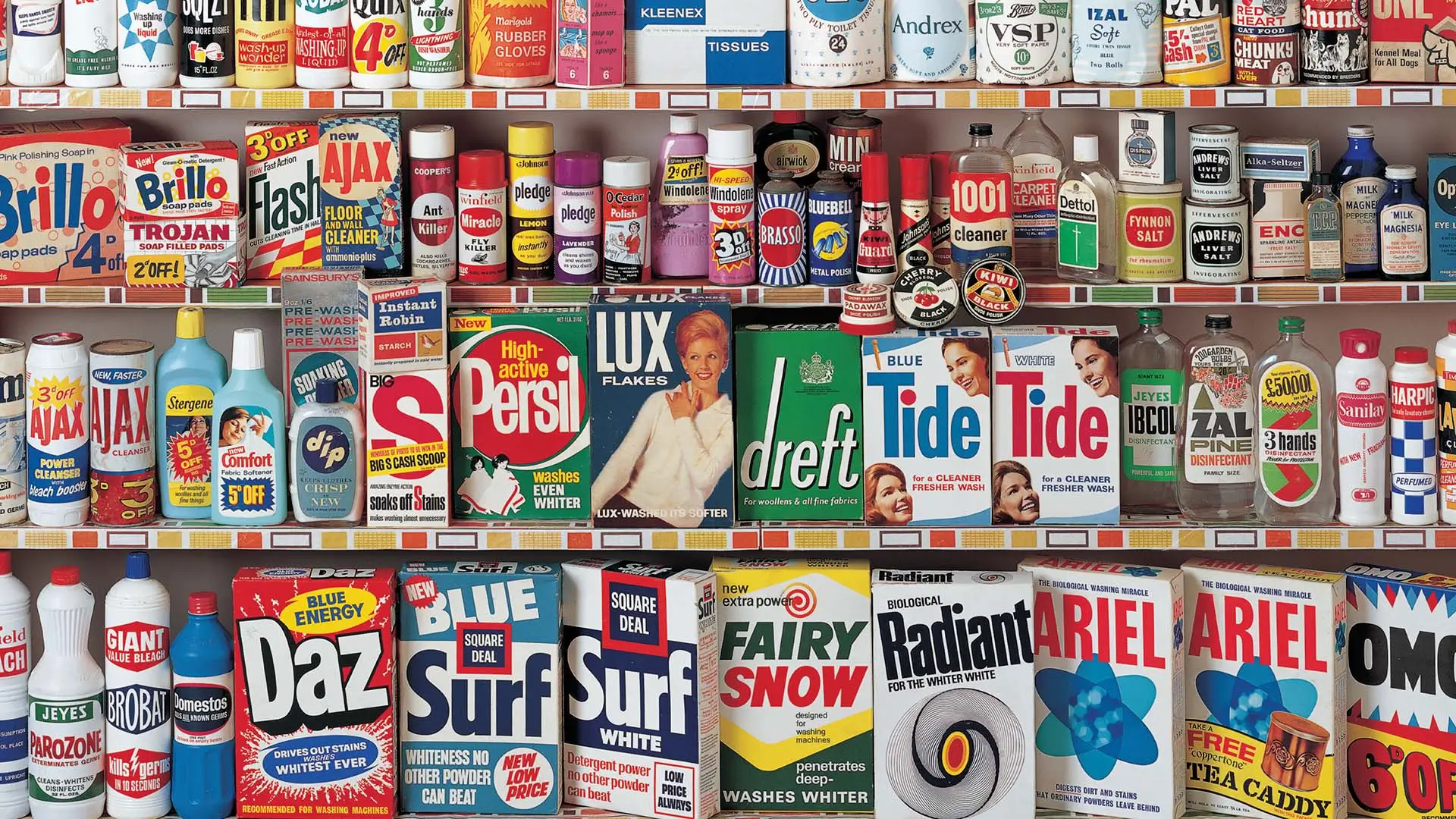
Pay your entry and make a beeline for the Time Tunnel, a corridor that displays once-iconic British brands that have now been discarded. Tudor Crisps, JJs, Ringos, Rock n Rollers. The packaging of our ancestors’ favourite brands is an overstimulating, sensory kaleidoscope behind the display glass. It’s our desires, projected back at us. A lesson in what was important to us then, and what is important to us now. Advertising makes up a massive proportion of the communication between human beings. Without it, history would be vastly less colourful.
So, there’s a duty for us to do it well, today. Advertising methods have moved on a lot since Rock n Rollers. It’s no longer about competing for your audience’s attention on the supermarket shelf, it’s about winning over Darren, who loves Hyrox and drives a Ford Puma Gen E. We target nowadays. The communication has gotten even closer, and more specific.
Which is why we believe that the message your communication conveys is more imperative than ever. That thread of truth in your product has to be robust enough to feel specific to Darren, but also ten million others. Finding that isn’t always easy. But at RBH, it is our speciality. We’ve been in advertising for over 30 years, and we still believe in our ability to find some common ground with every person on this planet. And frankly, if you were to ask anyone here what they think the meaning of advertising is, that’s more than likely to be the answer you’ll get.
Why don’t you come in and test us out? Visit our contact page and get in touch today: https://rbh.co.uk/contact/