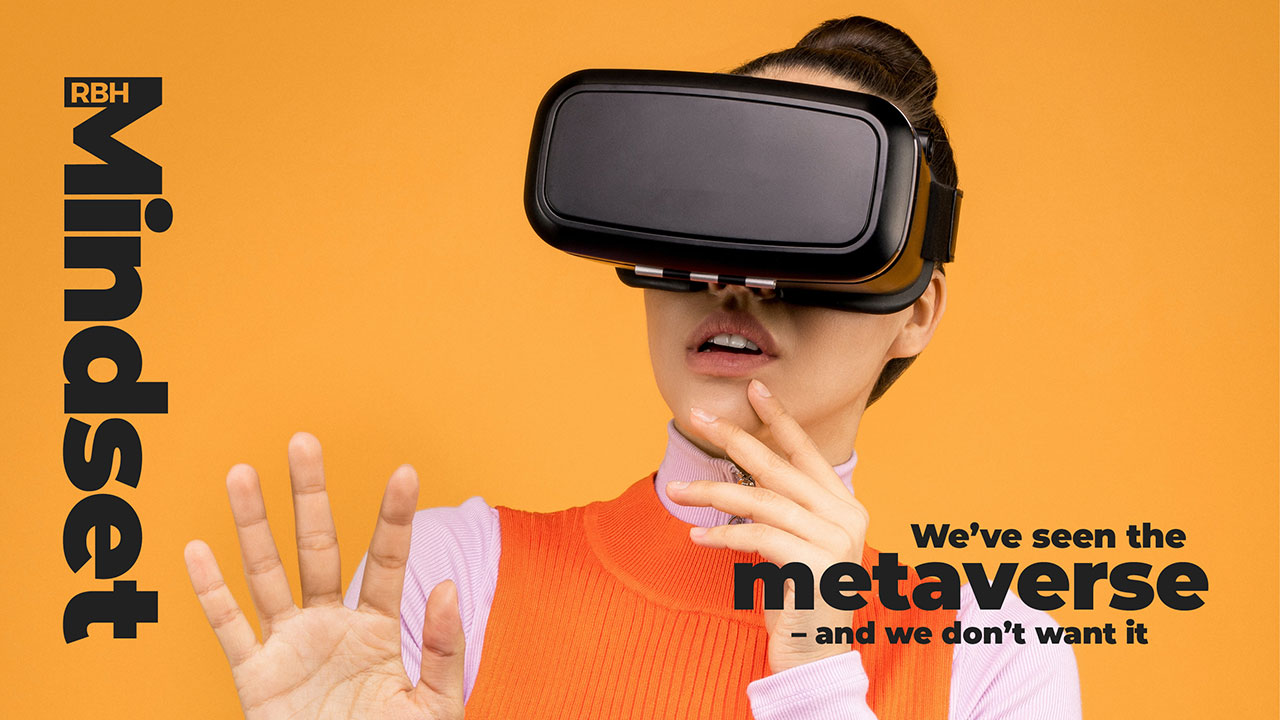
We’ve seen the metaverse – and we don’t want it.

The idea of a metaverse as a virtual platform using avatars is nothing new. Using this definition, metaverses in the form of MMOs such as World of Warcraft, Second Life, and even Club Penguin have existed long before Zuckerberg’s vision. Using these platforms, players can enter a virtual world using a fully customisable avatar, interact with others across the globe, play games, create a ‘home space’ and even earn and spend currency on completely digital items such as new clothes for their avatar or home décor for their virtual living space.

Find out more about our metaverse discoveries, past and present, by downloading our latest Mindset Report below


Written by Joe Hepburn

Insight Partner at RBH Creative Communications. Helping your brand work smarter.

You may also like…

How brands should be using colour in 2026

How brands should be using colour in 2026

One of the funny things about colour is it has everything, and nothing, to do with perspective.

Because there’s no way to guarantee that you and I see the same colour when we both point at ‘yellow’ on a colour chart. We might try to describe what we see – a bright, full colour – but that doesn’t describe the quality of what yellow is, just its saturation and brightness. So, we change tack. Let’s call it the happy colour, the shining, optimistic hue of childhood and buttercups. We can agree on that, and so we can assure ourselves we are seeing the same thing, and rest easy, once again.

Gen Z doesn’t love TikTok like it used to

Gen Z doesn’t love TikTok like it used to

Gen Z is TikTok’s most important audience. It has been ever since Musical.ly emerged in 2014, and it still represents roughly 60% of TikTok’s users today. Without a doubt, the group constitutes its most important relationship. So, I can only imagine how worrying it’s been for TikTok since the new Harris Poll report reported 60% of Gen Z no longer consider the platform to be trustworthy in 2026.

Get in touch